Technology

What Is a Zettabyte? Understanding the Scale of Modern Data

Learn what a zettabyte is, how ZB compares with gigabytes and other storage units, and why global data growth, cloud storage, data centers, and AI infrastructure are pushing us into the zettabyte era.

What Is a Zettabyte? Understanding the Scale of Modern Data

What Is a Zettabyte? Understanding the Scale of Modern Data

A gigabyte still feels like a useful amount of storage when you’re looking at the size of an application or checking how much space remains on your phone. A terabyte feels large enough to hold an impressive collection of photographs, videos, games, and documents.

Then you reach the zettabyte.

A zettabyte, abbreviated as ZB, is a unit of digital information equal to one sextillion bytes when using the standard decimal measurement. Written out, that is 1 followed by 21 zeros:

1 ZB = 1,000,000,000,000,000,000,000 bytes

That number is so far removed from everyday storage that it is difficult to picture. Zettabytes become more useful when we stop thinking about individual devices and start thinking about data at the scale of cloud platforms, data centers, internet traffic, and global digital activity.

That is the scale modern computing is increasingly operating at.

A Zettabyte Is a Very Large Unit of Digital Storage

Digital storage is commonly described using a hierarchy of units. Each step represents a much larger amount of data than the one before it.

Using decimal measurements:

1 kilobyte (KB) = 1,000 bytes
1 megabyte (MB) = 1,000 KB
1 gigabyte (GB) = 1,000 MB
1 terabyte (TB) = 1,000 GB
1 petabyte (PB) = 1,000 TB
1 exabyte (EB) = 1,000 PB
1 zettabyte (ZB) = 1,000 EB

By the time we reach a zettabyte, we are talking about:

1 ZB = 1,000,000,000,000 GB

In other words, one zettabyte is one trillion gigabytes under the decimal system.

A laptop with 1 TB of storage would need to be multiplied by a billion to reach one zettabyte of raw capacity. At that point, thinking in terms of individual computers stops being particularly helpful.

Why a Zettabyte Equals a Sextillion Bytes

Storage terminology can sound complicated, but the decimal progression is fairly consistent.

A kilobyte uses (10^3) bytes. A megabyte uses (10^6). A gigabyte uses (10^9). Each larger unit adds another factor of 1,000.

By the time we reach a zettabyte:

1 ZB = 10²¹ bytes

which is:

1,000,000,000,000,000,000,000 bytes

In the short-scale numbering system used in English, that is one sextillion bytes.

The number is enormous, but the underlying measurement is simply an extension of the same system we already use for megabytes, gigabytes, and terabytes.

Decimal and Binary Storage Measurements Are Different

There is an important complication in conversations about digital storage: decimal measurement and binary measurement are not the same thing.

The International System of Units uses decimal prefixes. Under that convention:

1 kilobyte = 1,000 bytes
1 megabyte = 1,000,000 bytes
1 gigabyte = 1,000,000,000 bytes
1 zettabyte = 10²¹ bytes

Computing has also historically used powers of 2 when describing memory and storage. To distinguish these values more clearly, binary prefixes such as kibibyte, mebibyte, gibibyte, and zebibyte are used.

A zebibyte, abbreviated ZiB, is:

1 ZiB = 2⁷⁰ bytes

which is larger than one decimal zettabyte.

This distinction is easy to miss because storage terminology has not always been used consistently. When discussing a zettabyte in the standard SI sense, however, the intended value is normally (10^{21}) bytes.

Zettabytes Make More Sense at Global Scale

Nobody is likely to buy a one-zettabyte SSD for their laptop.

The unit becomes useful when measuring data across enormous systems.

Think about how much digital information is created and moved every day. Smartphones produce photographs and videos. Businesses create databases, backups, documents, logs, and analytics data. Streaming services deliver huge volumes of video. Sensors continuously produce measurements. Social platforms process images, messages, and uploads.

Then there are copies.

A file may exist on a user’s device, in cloud storage, inside a backup, in a disaster-recovery system, and temporarily inside other processing infrastructure.

At that scale, terabytes and even petabytes become awkward units.

Zettabytes give us a way to discuss data capacity at global scale without writing an uncomfortable number of zeros every time.

The Zettabyte Era Arrived Because Data Became Continuous

There was a time when most digital data was created deliberately.

Someone wrote a document.

Someone took a photograph.

Someone created a database record.

Modern systems generate data almost continuously.

Applications produce logs and telemetry. Vehicles contain sensors. Security systems record video. Websites track events. Businesses collect transaction histories. Scientific instruments generate large datasets. Connected devices constantly send measurements.

The internet also shifted toward high-volume media. A text document can be tiny compared with high-resolution photographs, 4K video, or large scientific datasets.

This combination of more users, more devices, richer media, and continuous machine-generated information has pushed discussions of global data growth into the zettabyte range.

This is sometimes described as the zettabyte era.

Data Centers Turn Huge Numbers Into Physical Infrastructure

It is easy to talk about digital data as though it exists somewhere abstract.

It doesn’t.

Ultimately, data has to live on physical hardware.

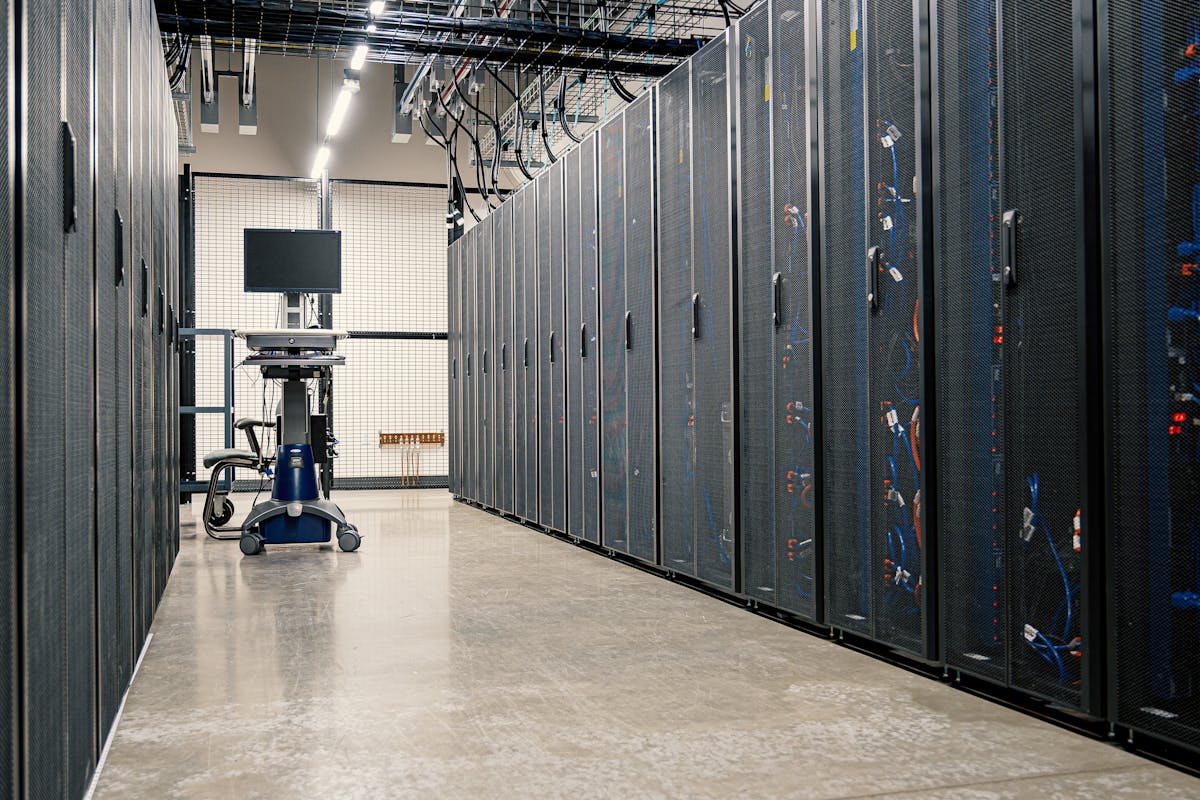
Modern data centers contain enormous numbers of storage devices, servers, networking systems, power equipment, and cooling infrastructure. Large cloud providers operate facilities across multiple regions so data and computing resources can be placed closer to users and protected against failures.

Storing information at massive scale therefore requires much more than buying disks.

Storage systems need redundancy.

Hardware fails and needs replacing.

Data has to move across networks.

Backups need to be maintained.

Access has to be controlled.

Systems need enough performance to read and write the information when applications need it.

A zettabyte may be a digital measurement, but supporting zettabyte-scale computing is a very physical problem.

Cloud Storage Made Massive Capacity Easier to Consume

Cloud storage changed the way organizations think about capacity.

Previously, a company expecting rapid data growth might have needed to purchase storage hardware in advance, install it in a data center, and estimate how much capacity it would need several years into the future.

Cloud platforms make storage available as a service.

Applications can add capacity without every organization operating all of the underlying hardware itself. Data can also be distributed across regions, archived into lower-cost storage tiers, replicated, and connected to large-scale processing services.

That convenience does not make storage unlimited.

It changes who operates the infrastructure and how organizations pay for it.

Once data reaches enormous volumes, cost becomes part of the architecture.

AI Is Creating Another Reason to Think About Storage Scale

Artificial intelligence has added another dimension to data infrastructure.

Modern AI development can involve enormous datasets containing text, images, audio, video, code, or specialized domain information. Those datasets may need to be collected, cleaned, transformed, copied, versioned, and made available to training infrastructure.

The model itself also creates data.

Training runs can produce checkpoints, logs, metrics, intermediate artifacts, and model versions. Production AI systems may generate additional telemetry and operational data.

This means AI infrastructure is not only a computing problem.

It is also a storage and data-movement problem.

A powerful AI accelerator is not particularly useful if the system cannot supply it with the required data quickly enough.

GPU Infrastructure Depends on the Data Around It

Much of the attention around modern AI infrastructure goes toward GPUs and other accelerators.

That makes sense. Training and running large models can require substantial computational power.

But the GPU is only one part of the system.

Data may need to move from storage through high-speed networks into compute clusters. Training checkpoints need somewhere to go. Large datasets may be shared across many machines. Multiple training jobs may need access to the same underlying information.

This creates a relationship between GPU infrastructure, networking, and storage infrastructure.

Adding more computational power does not automatically increase useful performance if the surrounding system cannot feed that compute efficiently.

At large scale, architecture becomes a balancing act between processing power, network bandwidth, storage capacity, and storage performance.

More Data Means More Than More Disks

A common assumption is that growing from a petabyte to an exabyte or eventually toward zettabyte-scale storage is primarily a capacity problem.

The difficult part is often everything surrounding the data.

How quickly does it need to be accessed?

How many copies are required?

How long must it be retained?

Which data needs high-performance storage?

Which data can be archived?

How is it protected?

How quickly can it be recovered?

How much network traffic is created when it moves?

The same amount of data can have very different infrastructure requirements depending on how it is used.

A rarely accessed archive and an AI training dataset might occupy similar raw capacity while creating completely different demands on the systems around them.

Storage Costs Become an Architecture Decision

Storage becomes cheaper over time in many forms, but enormous quantities of data still create enormous bills.

The cost is also not limited to storing the original bytes.

Organizations may pay for replication, backups, snapshots, high-performance storage tiers, data transfers, retrieval operations, and the computing systems used to process the information.

This is why storage costs increasingly influence design decisions.

Not every log needs to be retained forever.

Not every dataset needs to remain on the fastest storage.

Not every copy is still useful.

Data can move through different storage tiers as it becomes less frequently accessed, and retention policies can remove information that no longer provides enough value to justify keeping it.

At zettabyte scale, small inefficiencies stop being small.

A Zettabyte Is Really a Measurement of How Digital the World Has Become

The definition of a zettabyte is straightforward:

1 ZB = 10²¹ bytes
     = 1 sextillion bytes
     = 1 trillion gigabytes

The more interesting part is why we need a unit that large at all.

Digital activity has expanded from documents stored on individual computers into a world of cloud platforms, streaming media, connected devices, global applications, enormous data centers, and AI systems that consume and produce vast quantities of information.

The zettabyte gives us language for talking about that scale.

But every additional byte still has consequences. It needs somewhere to live, infrastructure to move it, systems to protect it, and money to keep it available.

That becomes especially important as AI drives investment in GPUs, networking, and large-scale storage. The challenge is no longer simply whether we can create more data.

We have become exceptionally good at that.

The harder question is deciding which data is valuable enough to keep, how quickly we need to reach it, and what we are willing to spend to store it.